Get clear answers about your off-road vehicle accident lawsuit, including who may be liable, common injuries, and what compensation you can pursue.
A serious injury doesn’t just take a physical toll; it creates immense financial pressure. The medical bills start arriving almost immediately, from the ambulance ride and emergency room visit to surgeries and ongoing physical therapy. At the same time, you may be unable to work, causing your income to stop while your expenses pile up. You shouldn’t have to carry this financial burden when someone else’s carelessness is the reason you were hurt. An off-road vehicle accident lawsuit is a legal tool designed to help you recover these costs and regain your financial stability, ensuring the responsible party pays for the harm they caused.
Key Takeaways
- Identify all responsible parties: The person at fault isn’t always another driver; it could be a vehicle manufacturer because of a design flaw or a property owner for unsafe trail conditions.
- Act quickly to protect your rights: Gathering evidence like photos and witness statements right away is critical, and you must file your claim within Arizona’s two-year statute of limitations.
- Understand the full scope of compensation: A successful claim can cover more than just medical bills, including lost wages, future earning potential, and the significant non-financial costs of pain and suffering.
What Causes Off-Road Vehicle Accidents?
When you’re recovering from an off-road vehicle accident, figuring out what went wrong is the first step toward getting justice. These incidents are rarely simple. More often, a combination of factors leads to a crash. Understanding the root cause is essential for determining who is responsible for your injuries and holding them accountable. The cause could be anything from another driver’s mistake to a hidden danger on the trail.
Reckless Driving and Driver Error
Many off-road accidents come down to human error. When a driver is careless, inexperienced, or reckless, the risk of a serious crash increases dramatically. This can include going too fast for the terrain, attempting dangerous maneuvers, or failing to pay attention to other riders. Driving under the influence of alcohol or drugs is another major factor that impairs judgment and reaction time. If another driver’s poor decisions caused your personal injury, they can be held responsible for the harm you’ve suffered. It’s about their failure to operate the vehicle with reasonable care for the safety of others.
Faulty Vehicle Parts or Design
Sometimes, an accident has nothing to do with the person driving. Instead, the cause is a defect in the machine itself. A sudden mechanical failure, like faulty brakes, a defective throttle, or a tire blowout, can cause a driver to lose control without warning. In other cases, the vehicle may have a fundamental design flaw that makes it inherently unstable or prone to rolling over, even during normal operation. When a defective part or a poor design leads to an accident, the vehicle’s manufacturer or distributor could be liable for your injuries.
Dangerous Trails and Unsafe Property
The environment where you ride plays a huge role in your safety. Property owners, whether they are private citizens or government agencies, have a responsibility to keep their trails reasonably safe or warn riders of potential dangers. An accident caused by an unmarked hazard, like a hidden ditch, a sudden drop-off, or a low-hanging wire, may be the fault of the property owner. This area of law, known as premises liability, holds landowners accountable for failing to address or warn visitors about unsafe conditions on their property. Your adventure shouldn’t turn into a disaster because someone else was negligent.
Missing or Defective Safety Gear
Protective gear like helmets and riding boots is designed to minimize injury in a crash. While not wearing a helmet can worsen an injury, it doesn’t automatically prevent you from seeking compensation if someone else caused the accident. But what if the gear you were relying on fails? If a helmet cracks on impact or other protective equipment proves to be defective, the manufacturer of that gear could be held responsible. A product that fails to provide the protection it promises is a serious issue, and you have the right to hold the company that made it accountable.
Common Injuries from Off-Road Accidents
The thrill of exploring Arizona’s rugged terrain on an ATV or UTV is undeniable, but it comes with significant risks. Unlike passenger cars, these vehicles offer little protection in a crash, leaving riders exposed to direct impact with the ground, trees, or other obstacles. Even a seemingly minor accident can result in severe, life-altering injuries. If you’ve been hurt, understanding the types of harm you’ve suffered is the first step toward getting the help you need to recover. A personal injury claim can help you secure compensation for the medical care and financial stability you deserve.
Traumatic Brain and Head Injuries
Even with a helmet, your head is incredibly vulnerable in an off-road accident. A sudden jolt or impact can cause your brain to strike the inside of your skull, leading to a traumatic brain injury (TBI). These injuries range from concussions that may seem minor at first to severe trauma that causes long-term cognitive problems, memory loss, and personality changes. The effects of a TBI aren’t always immediate, and symptoms can develop over hours or days. You need to get a medical evaluation after any accident involving a blow to the head. The consequences can affect your ability to work and enjoy life, making it essential to account for future care needs.
Spinal Cord Damage and Paralysis
A spinal cord injury is one of the most catastrophic outcomes of an off-road vehicle accident. When a vehicle rolls over or a rider is thrown, the violent force can fracture vertebrae and damage the delicate spinal cord. This can lead to partial or complete paralysis, permanently changing a person’s life in an instant. Victims often face a future of dependency on wheelchairs, extensive rehabilitation, and round-the-clock medical care. The financial and emotional costs are immense, affecting not just the injured person but their entire family. Securing compensation is vital to ensuring you have the resources for necessary home modifications, assistive technologies, and ongoing treatment.
Broken Bones and Fractures
Broken bones are extremely common in off-road accidents. The force of being ejected from a vehicle or pinned underneath it can easily cause multiple fractures in the arms, legs, ribs, and pelvis. These are not simple breaks that heal with a cast. Often, they are complex fractures requiring surgery, the insertion of metal plates and screws, and months of painful physical therapy. Recovery can be a long and difficult road, forcing you to take significant time off work and preventing you from performing daily tasks. The medical bills for surgery and rehabilitation can pile up quickly, adding financial stress to an already challenging physical recovery.
Internal Organ Damage
The blunt force trauma from an off-road crash can cause devastating injuries that aren’t visible on the surface. Your internal organs, such as the spleen, liver, and kidneys, can be bruised, torn, or ruptured from the impact, leading to dangerous internal bleeding. Punctured lungs are also a serious risk, especially if you suffer broken ribs. These injuries are life-threatening and require immediate emergency medical attention. Even if you feel fine after an accident, it’s vital to get checked out by a doctor. The long-term effects of internal damage can be severe, sometimes requiring organ removal or leading to chronic health issues.
Who Can Be Held Responsible for Your Accident?
After an off-road vehicle accident, figuring out who is at fault can feel complicated. It’s often not as simple as blaming one person. Depending on the circumstances, several different parties could share responsibility for your injuries. Identifying everyone who may have played a role is a critical first step in ensuring you receive the full compensation you deserve. An experienced attorney can investigate your accident to determine if a negligent driver, a vehicle manufacturer, or a property owner is liable for what happened.
Filing a Claim Against a Negligent Driver
Many off-road accidents are caused by another driver’s carelessness. If someone was operating their vehicle recklessly by speeding, attempting dangerous stunts, or driving under the influence, they can be held accountable for the harm they caused. This is known as negligence. In some cases, the owner of the vehicle may also be at fault, especially if they allowed an inexperienced, unlicensed, or impaired person to drive. Pursuing a personal injury claim against a negligent driver or vehicle owner is often the most direct path to recovering costs for your medical bills, lost income, and other damages.
Holding a Manufacturer Accountable for Defects
Sometimes, the accident has nothing to do with the driver and everything to do with the vehicle itself. Off-road vehicles are complex machines, and a single faulty part can lead to a catastrophic failure. If your accident was caused by a design flaw or a defective component, such as brake failure, a tire blowout, or a steering system malfunction, the vehicle’s manufacturer could be held liable. These product liability cases require a deep investigation to prove that the vehicle was unsafe when it left the factory. Holding a large corporation accountable can be challenging, but it is an important step in getting justice and preventing future accidents.
Suing a Property Owner for Unsafe Conditions
Where you were riding matters. Private and public landowners have a responsibility to keep their property reasonably safe for visitors. If your accident was caused by a hidden danger on the trail, you may be able to file a claim against the property owner. This could include unmarked hazards like ditches, fallen trees, or unmaintained trails that create dangerous conditions. This area of law, known as premises liability, holds owners accountable for failing to warn riders about known risks. Proving the owner knew about the hazard is key to building a successful case.
Understanding Your Insurance Coverage
While you work to identify the at-fault parties, it’s also important to understand the role insurance will play. The negligent party’s insurance policy is typically the primary source of compensation in an accident claim. However, your own insurance policy might also provide coverage, depending on the details of your plan. Insurance companies are focused on protecting their bottom line, which means they often try to minimize payouts or deny claims altogether. An attorney can handle all communications with the insurance adjusters for you, fighting to make sure you receive a fair settlement that covers your medical expenses, lost wages, and pain and suffering. You can find answers to common insurance questions on our FAQ page.
How Do You Prove Someone Else Was at Fault?
Winning a personal injury claim hinges on one crucial element: proving the other party was at fault for your accident. In legal terms, this is called proving negligence. It means you have to show that someone else’s carelessness directly caused your injuries. This might sound intimidating, but it’s a methodical process of gathering facts and presenting them clearly. With the right evidence and legal support, you can build a strong case that demonstrates exactly what happened and why you deserve compensation for your recovery.
Establishing Negligence
To establish negligence, you and your attorney must show that the other party failed to act with reasonable care, which led to the accident and your injuries. Think of it this way: every driver or property owner has a basic responsibility (a “duty of care”) to avoid causing harm to others. When they breach that duty through reckless actions or inaction, and you get hurt as a result, they can be held legally responsible. If you’re hurt in an off-road accident, you may be able to file a personal injury claim to get money for your injuries and other losses.
Collecting Key Evidence from the Scene
What you do in the moments after an accident can make a huge difference in your case. If you are able, try to act quickly. First, call 911 to get medical help and ask for the police to file an official report. Use your phone to take photos of everything: the vehicle damage, the accident scene, any relevant trail conditions or hazards, and your injuries. If there are any witnesses, get their names and contact information. This initial evidence is often the most powerful tool for showing what really happened and who was responsible for the accident.
Using Expert Testimony to Reconstruct the Accident
Sometimes, photos and police reports don’t tell the whole story. Complex cases often require a deeper look from a professional. Building a strong case involves gathering extensive evidence, which can include expert opinions from accident reconstructionists or engineers. These experts can analyze the physical evidence to piece together the sequence of events, determine vehicle speeds, and provide a scientific explanation of how the crash occurred. Your legal team can work with these specialists to build a compelling argument that clearly explains why the other party is at fault.
Challenging Common Myths About Fault
Many people believe that if they were even slightly at fault for an accident, they can’t get any compensation. This is a common myth. Arizona follows a “comparative negligence” rule, which means you can still recover damages even if you were partially to blame. Your total compensation will simply be reduced by your percentage of fault. So, if you were found to be 10% at fault, your final award would be reduced by 10%. Don’t let a fear of sharing some blame stop you from exploring your options. An experienced attorney can help you understand how this rule applies to your situation.
What Are the Steps in an Off-Road Accident Lawsuit?
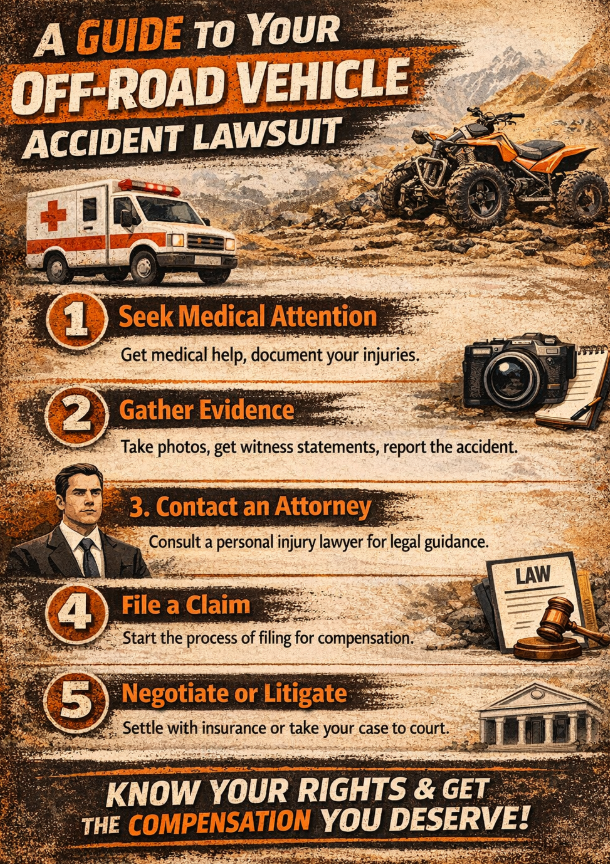
The idea of a lawsuit can feel overwhelming, especially when you’re focused on recovering from an injury. But the legal process is more straightforward than you might think. It’s a series of structured steps designed to uncover the truth and determine fair compensation. Think of it as a roadmap that your attorney will guide you through, handling the complex details so you can focus on your health. The journey typically begins with a simple conversation and moves through investigation, formal filings, and negotiations.
Most off-road accident cases are resolved through a settlement without ever stepping inside a courtroom. This is because a skilled attorney can build a strong case by gathering compelling evidence and negotiating effectively with the at-fault party’s insurance company. The goal is always to secure the compensation you need to cover medical bills, lost wages, and other damages. If a fair agreement can’t be reached, however, we are always prepared to take your case to trial. Understanding these steps can help demystify the process and give you confidence as you move forward. Our team is here to manage every stage, ensuring your rights are protected and your voice is heard. We handle the legal heavy lifting, providing clarity and support from start to finish.
Your Initial Consultation and Case Review
Your first step is to sit down with an experienced attorney for a free, no-pressure consultation. This is simply a conversation where you can share the details of your off-road accident and get honest feedback about your legal options. We’ll listen to your story, ask questions about what happened, and review any documents you have, like police reports or medical records. It’s also your opportunity to ask us anything you want to know about our experience or the legal process. It’s very important to talk to a lawyer well before the legal deadlines. In Arizona, you generally have two years to file a personal injury claim, and waiting too long could mean losing your right to seek compensation.
Filing the Complaint
If we determine you have a strong case, the next step is to formally begin the lawsuit by filing a complaint. This is the official legal document that names the person or entity you are suing (the defendant) and explains why they are responsible for your injuries. For example, you might file a claim against a reckless driver, the manufacturer of a faulty vehicle part, or the owner of the property where the accident occurred due to unsafe conditions. Filing the complaint with the court officially puts the defendant on notice and requires them to respond, setting the legal process in motion. This is a critical step that moves your case from a private insurance matter into the formal court system.
Gathering Evidence (The Discovery Phase)
After the complaint is filed, we enter a phase called discovery. This is the formal investigation stage where both sides gather and exchange all the evidence related to the case. Building a strong claim requires a lot of information, so we work diligently to collect everything needed to prove what happened and who was at fault. This includes obtaining official crash reports, photos and videos from the scene, statements from any witnesses, and all of your medical records. We may also hire experts, like accident reconstructionists, to provide professional opinions on how the crash occurred. This thorough evidence-gathering process is the foundation of your case and is essential for successful negotiations.
Negotiating a Settlement or Going to Trial
With a strong case built on solid evidence, we can begin negotiating with the defendant’s insurance company for a fair settlement. The vast majority of personal injury cases are resolved at this stage. We will present our findings and make a clear demand for compensation to cover your medical expenses, lost income, and pain and suffering. If the insurance company makes a reasonable offer, you can accept it and the case will be resolved. However, if they refuse to negotiate fairly, we won’t hesitate to take your case to trial. There, we will present your case to a judge or jury who will decide the final outcome. You can contact our team anytime for a free consultation to discuss your options.
How Long Do You Have to File a Lawsuit in Arizona?
After an accident, your focus is on healing. However, it’s also important to be aware of the legal deadlines that can affect your ability to get compensation. In Arizona, there are strict time limits for filing a lawsuit, known as the statute of limitations. Understanding these deadlines is a critical first step in protecting your rights and ensuring you have the option to pursue a claim for your injuries. Missing this window can mean losing your right to seek justice altogether, no matter how strong your case is.
Understanding Arizona’s Statute of Limitations
So, what exactly is the statute of limitations? Think of it as a legal countdown timer. In Arizona, the law generally gives you two years from the date of your injury to file a personal injury lawsuit. This two-year rule applies to most cases, including those involving off-road vehicle accidents. The clock starts ticking the moment the accident happens. While two years might sound like a long time, building a strong case involves gathering evidence, interviewing witnesses, and dealing with insurance companies, all of which takes time. That’s why it’s so important to be aware of your specific deadline from the very beginning.
Exceptions to the Filing Deadline
While the two-year rule is the standard, some situations can change the deadline. For example, if the injured person is a minor, the two-year clock doesn’t start until their 18th birthday. This gives them time to decide whether to pursue a claim as an adult. On the other hand, some deadlines are much shorter. If your claim is against a government or public entity, like a city or state agency, you typically only have one year to file. Because these exceptions can be confusing, it’s a good idea to discuss the details of your accident with an attorney who can confirm the exact filing deadline for your case.
Why Acting Quickly Is So Important
Waiting to take action can seriously weaken your case, even if you’re still within the legal time limit. Over time, crucial evidence can disappear. The accident scene can change, vehicle damage gets repaired, and the memories of witnesses can fade and become less reliable. By starting the process early, you give your legal team the best chance to preserve important evidence and build the strongest possible claim on your behalf. The sooner you contact an attorney, the sooner they can start working to protect your rights and manage these critical deadlines, allowing you to focus on your recovery.
What Kind of Compensation Can You Receive?
After an off-road vehicle accident, figuring out how to cover your expenses can feel overwhelming. The goal of a personal injury lawsuit is to secure financial compensation, often called damages, to help you manage the costs of your injuries and other losses. This compensation is designed to help you get back on your feet financially, covering everything from hospital bills to the personal impact the accident has had on your life.
The amount and type of compensation you can receive depend entirely on the specifics of your case, including the severity of your injuries and the circumstances of the accident. Generally, damages fall into a few key categories. There are economic damages, which cover direct financial losses that have a clear dollar amount, like medical bills and lost wages. Then there are non-economic damages, which address less tangible losses like pain and suffering. In very rare cases, punitive damages may also be awarded to punish the person at fault for extreme negligence. An experienced attorney can help you identify all the potential damages you can claim to ensure you seek the full and fair compensation you deserve. Understanding what you may be entitled to is the first step toward building a strong claim.
Covering Your Medical and Recovery Costs
Medical bills are often the most immediate and stressful financial burden after an accident. Compensation can cover all of your past and future medical needs related to the injury. This includes everything from the initial ambulance ride and emergency room visit to hospital stays, surgeries, and prescription medications. It also accounts for long-term recovery costs, such as physical therapy, rehabilitation, necessary medical equipment like crutches or a wheelchair, and any ongoing care you might need down the road. If you’ve been hurt in an accident, you have the right to seek money for your injuries and recovery expenses.
Recovering Lost Income and Future Earnings
An injury doesn’t just affect your health; it can also impact your ability to work and earn a living. If you had to take time off from your job to recover, you can seek compensation for those lost wages. But what if your injuries are so severe that they permanently affect your ability to do your job or work at all? In that case, you may be able to recover damages for loss of future earning capacity. This compensation is meant to cover the income you would have earned if the accident had never happened. A successful lawsuit can help you recover money for both medical bills and lost income.
Compensation for Pain and Suffering
Not all losses from an accident come with a price tag. The physical pain, emotional distress, and mental anguish you experience are very real, and you deserve to be compensated for them. This is known as “pain and suffering.” It can include compensation for chronic pain, anxiety, depression, scarring or disfigurement, and the loss of enjoyment of life. For example, if you can no longer participate in hobbies or activities you once loved, that loss is considered. Lawsuits can help you get money for both your financial losses and these significant non-financial impacts. You can find answers to more questions about compensation on our FAQ page.
When Punitive Damages May Apply
In some exceptional cases, you might be awarded punitive damages. Unlike the other forms of compensation that are meant to cover your losses, punitive damages are intended to punish the at-fault party for extremely reckless or malicious behavior. These are not common and are reserved for situations where the defendant’s actions showed a conscious disregard for the safety of others. For example, if the other driver was knowingly operating a dangerously modified vehicle. If a loved one dies in an accident, the family can file a wrongful death lawsuit, which may also explore whether the at-fault party’s conduct warrants this type of penalty.
Related Articles
- How to File a Quad Bike Accident Compensation Claim
- Who’s at Fault in a Scooter Accident? Arizona Guide – AZ Law Now Injury Attorneys
- Rollover Accident Lawyer Buckeye: 5 Things to Know
- Personal Injury – AZ Law Now Injury Attorneys
Frequently Asked Questions
What if I was partially at fault for my off-road accident? You may still be able to get compensation. Arizona uses a legal rule called “comparative negligence,” which means you can recover damages even if you share some of the blame. A court will determine your percentage of fault, and your final compensation award will be reduced by that amount. For example, if you were found to be 20% responsible, your award would be reduced by 20%. Don’t assume you don’t have a case just because you might have made a mistake.
How much does it cost to hire an attorney for an off-road accident case? Most personal injury law firms, including ours, work on a contingency fee basis. This means you don’t pay any attorney’s fees upfront. We only get paid if we successfully win a settlement or verdict for you. The fee is a percentage of the total amount recovered. This approach allows you to get experienced legal help without worrying about the cost while you’re trying to recover from your injuries.
What should I do if the other driver’s insurance company contacts me? It’s best to be cautious. Insurance adjusters are trained to protect their company’s financial interests, which often means trying to settle your claim for the lowest amount possible. You are not required to give them a recorded statement. You can politely decline to speak with them and tell them your attorney will be in touch. Anything you say could potentially be used to weaken your claim later, so it’s wise to consult with a lawyer before having any detailed conversations.
Do I still have a case if my accident happened on public land? Yes, you can still have a case if your accident occurred on public land, like a state or national park. However, claims against government entities have different rules and much shorter deadlines than claims against private individuals or companies. In Arizona, you typically have only one year to file a lawsuit against a public entity. Because of this tight timeline, it is very important to speak with an attorney as soon as possible to protect your rights.
My injuries didn’t seem serious at first. Is it too late to seek medical care or file a claim? It is never too late to prioritize your health, so you should see a doctor immediately if you are experiencing pain or other symptoms. Some serious injuries, like traumatic brain injuries or internal damage, don’t show obvious signs right away. As for filing a claim, Arizona’s statute of limitations generally gives you two years from the date of the accident to file a lawsuit. Even if some time has passed, you may still be within this window.