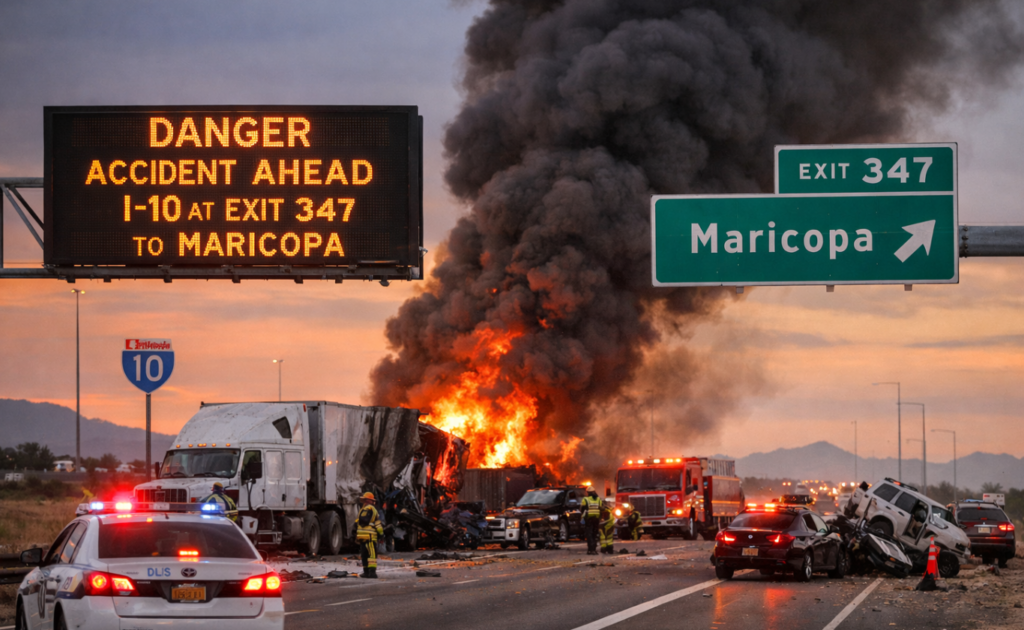
For thousands of commuters traveling between Maricopa and the Phoenix metro area, the connection between Arizona State Route 347 and Interstate 10 is a daily choke point. What looks like a standard freeway interchange on a map has quietly become one of the most dangerous traffic zones in Pinal County, especially during rush hour.
This stretch funnels nearly all Maricopa commuter traffic onto one highway before merging with one of the busiest interstate corridors in the Southwest. The result is a combination of high speeds, sudden slowdowns, and confusing lane patterns that frequently lead to crashes.
Why This Interchange Is So Dangerous
Several factors make the SR-347 / I-10 interchange particularly hazardous for drivers entering or leaving Maricopa.
Heavy Commuter Volume
Maricopa is one of the fastest-growing cities in Arizona, but its transportation infrastructure has struggled to keep up. Because Arizona State Route 347 is essentially the city’s only major connection to the Phoenix metro area, thousands of drivers rely on it every morning and evening.
During peak commute hours, long lines of vehicles attempt to merge onto Interstate 10, creating dangerous congestion where traffic shifts rapidly from freeway speeds to stop-and-go conditions.
Sudden Speed Changes
Drivers approaching the interchange may be traveling at 65–75 mph, only to encounter sudden braking as traffic backs up near the ramps. These abrupt speed changes are a major contributor to:
- Rear-end collisions
- Multi-vehicle chain reactions
- Secondary crashes involving vehicles attempting to avoid stopped traffic
Rear-end accidents are particularly common in areas where freeway traffic meets heavy commuter bottlenecks.
Confusing Lane Merges
The interchange design requires drivers to make quick lane decisions while traveling at freeway speeds. Vehicles merging from SR-347 must quickly integrate with fast-moving traffic on Interstate 10, while other drivers are simultaneously trying to exit.
This creates a high-risk environment where:
- Drivers make sudden lane changes
- Vehicles cut across multiple lanes to reach exits
- Large trucks and commuter vehicles compete for space
These lane conflicts significantly increase the likelihood of side-impact and merge collisions.
Limited Alternate Routes
Unlike most cities in the Phoenix area, Maricopa lacks multiple freeway connections. The heavy dependence on Arizona State Route 347 means that when traffic backs up near the interchange, drivers often become impatient or attempt risky maneuvers to avoid delays.
This includes aggressive lane changes, speeding once traffic clears, and drivers attempting to merge at the last second.
Crash Risks for Maricopa Drivers
Because of these conditions, drivers traveling between Maricopa and Phoenix face a higher risk of several types of accidents, including:
- Rear-end collisions during sudden slowdowns
- Side-swipe crashes during lane merges
- Multi-vehicle freeway pileups
- High-speed crashes involving commercial trucks
The combination of heavy commuter demand and limited roadway capacity means this interchange will likely remain a crash hotspot until major infrastructure improvements are made.
What Drivers Can Do to Stay Safer
If you regularly drive between Maricopa and Phoenix using Arizona State Route 347 and Interstate 10, a few precautions can reduce your risk:
- Leave extra space between vehicles approaching the interchange
- Watch for sudden braking as traffic backs up
- Avoid aggressive lane changes near merging traffic
- Be especially cautious during early morning and evening rush hours
When a Crash Happens
Accidents at the SR-347 and I-10 interchange often involve multiple vehicles, commercial trucks, and complex liability issues. Determining who is responsible may require reviewing traffic conditions, driver behavior, and insurance coverage.
If you or a loved one has been injured in a crash near the SR-347 / I-10 interchange or anywhere in Maricopa, understanding your legal options can help you recover compensation for medical bills, lost wages, and other damages.