
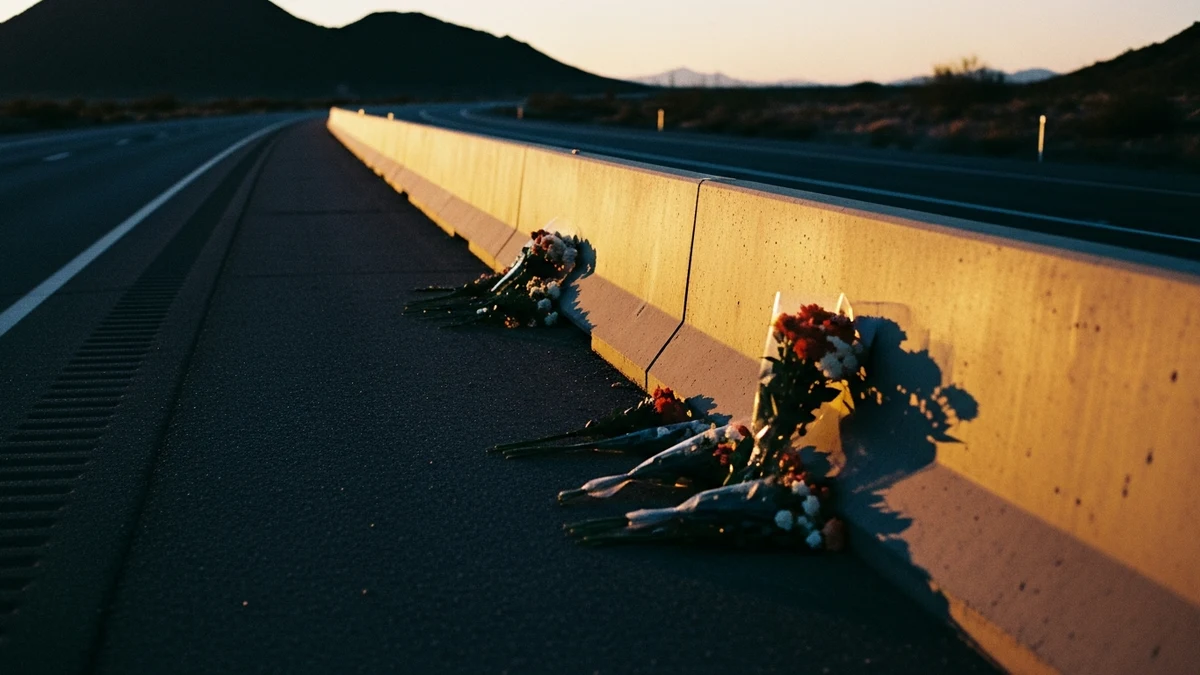
Wrong-way crashes are among the most violent collisions on Arizona roads. They’re almost always head-on. The combined speed of two vehicles moving toward each other means the force of impact is devastating. Survival rates are lower. Injuries are catastrophic. And in most cases, the wrong-way driver was impaired.
If you survived a wrong-way crash, or if you lost a family member in one, this guide walks through what comes next. The evidence you need to preserve. The legal claims available to you. The timelines that matter. And the support you’ll need along the way.
Our investigation into wrong-way crashes on Arizona highways found that despite $4 million in technology deployments, wrong-way fatalities haven’t declined. The pattern is consistent: impaired drivers, late-night hours, freeway on-ramps, and head-on collisions at highway speed. Understanding that pattern helps your case.
Right Now: If You Survived a Wrong-Way Crash
You’re alive. That’s not a given in these collisions. The injuries you’re dealing with are likely severe: traumatic brain injury, spinal damage, internal bleeding, broken bones, and crush injuries are common.
Stay still at the scene if you suspect head, neck, or back injuries. Wrong-way crashes produce enormous deceleration forces, and moving with an undiagnosed spinal injury can cause permanent damage. Wait for paramedics.
Call 911 if you’re able, or if someone else has already called, stay put and wait. The responding officers will handle the scene, test the wrong-way driver for impairment, and generate a crash report.
Don’t talk to the other driver or their passengers. Emotions run high after a wrong-way crash, especially if impairment is obvious. Don’t confront anyone. Let law enforcement handle it. Anything said at the scene can complicate the legal process later.
If you can use your phone, photograph everything: the vehicles, the point of impact, the road, the other driver’s license plate, any visible bottles, cans, or containers in or around the wrong-way vehicle, the highway signs and on-ramp if visible, skid marks or the absence of them (impaired drivers often don’t brake).
Right Now: If a Family Member Didn’t Survive
The shock is immediate and total. Nothing prepares you for this call.
In the first days, focus on yourself and your family. Eat something. Sleep when you can. Accept help from the people around you. The legal process can wait a few days. The evidence can’t, but your attorney handles that part.
Here’s what needs to happen soon.
Request an autopsy report. The medical examiner’s office performs autopsies in all fatal crashes. The report documents cause of death, severity of injuries, and may include toxicology results for your family member (to establish they weren’t impaired). Request a copy when it’s available.
Obtain certified copies of the death certificate at the same time. You’ll need five to ten copies. Your funeral director can help you order them through the Arizona Department of Health Services or the county vital records office.
Contact a wrongful death attorney. This is the step that protects everything else. Your attorney preserves evidence, communicates with insurance, and begins investigating all potentially responsible parties. Most wrongful death consultations are free, including ours.
If the wrong-way driver was drinking at a bar, restaurant, or licensed establishment before the crash, Arizona’s dram shop law (ARS 4-311) lets you bring a claim against that business.
The filing deadline isn’t settled Arizona law. The personal injury claim against the driver gets two years, but the strongest reading of the dram shop deadline gives it just one. If your attorney doesn’t investigate the driver’s drinking location immediately, this claim can expire before anyone realizes it exists.
First 48 Hours: Preserving Evidence
Wrong-way crash evidence is some of the most time-sensitive in personal injury law. Here’s what your attorney should preserve in the first 24 to 48 hours.
BAC and toxicology results anchor the case. Law enforcement handles the blood draw, but your attorney ensures the results are preserved and disclosed. Defense attorneys sometimes challenge blood draw procedures, and having the full chain of custody documented from the start prevents surprises.
Bar and restaurant records are the next evidence layer. Receipts, credit card transactions, surveillance footage, server notes. Your attorney sends preservation letters to any establishment the driver may have visited.
Dashcam footage can capture the incident from multiple angles. Footage from the wrong-way driver’s vehicle (if equipped) and from any vehicles that witnessed the crash. Some commercial vehicles on the highway may have captured the wrong-way driver traveling against traffic.
Bars overwrite surveillance footage on short loops. Credit card records can be purged. Even law enforcement evidence can become harder to access if not formally preserved early.
The preservation letter puts every potentially responsible party on legal notice that they must save all relevant records. Destroying evidence after receiving a preservation letter exposes them to court sanctions.
Investigating Dram Shop Liability
Most wrong-way crashes involve alcohol. The question your attorney will ask is: where was the driver drinking?
Arizona’s dram shop law holds bars, restaurants, and liquor stores liable when they serve alcohol to someone who is obviously intoxicated and that person causes injury or death. The legal standard is whether the establishment served the driver when the driver was “obviously intoxicated” (ARS 4-311).
Here’s what the investigation looks like.
Toxicology and BAC results anchor the case. Law enforcement draws blood from the wrong-way driver at the scene or at the hospital, and the blood alcohol content establishes the level of impairment.
A BAC of 0.15 or higher (roughly twice the legal limit) suggests the driver consumed a significant amount of alcohol over a period of time. Someone served them.
Credit card and debit card records come next. Your attorney can subpoena the driver’s financial records to identify where they purchased drinks. A charge at a bar two hours before the crash is powerful evidence.
Bar receipts and surveillance footage close the loop. Once the establishment is identified, your attorney sends a preservation letter and eventually subpoenas their records. How many drinks were served? Over what time period? Did the staff continue serving after the driver showed signs of impairment?
Security camera footage often answers these questions directly, and Maricopa County Superior Court expects to see that footage in evidence.
Dram shop claims matter because bar and restaurant insurance policies often have higher limits than the individual driver’s auto policy. In cases with catastrophic injuries or wrongful death, the driver’s auto insurance may not come close to covering the damages. The dram shop claim fills that gap.
For a deeper look at Arizona’s dram shop and social host liability rules, read our legal guide on dram shop liability.
The Criminal Case and Your Civil Claim
The criminal case and your civil case are separate. They run on parallel tracks and address different things.
The criminal case is between the state of Arizona and the wrong-way driver. The county attorney files charges. These may include DUI, aggravated DUI, endangerment, manslaughter, or negligent homicide depending on the facts. The criminal case can result in prison time, fines, and license revocation. It doesn’t result in compensation for you or your family.
Your civil claim is between you (or your family) and the at-fault parties. This is where you recover compensation for medical bills, lost wages, pain and suffering, and other damages. You don’t have to wait for the criminal case to resolve before pursuing your civil claim. Most attorneys pursue both tracks simultaneously.
As a victim, you have rights in the criminal case under Arizona’s Victim’s Bill of Rights (Arizona Constitution, Article 2, Section 2.1 and ARS 13-4401). You have the right to be notified of hearings, to be present at trial and sentencing, and to be heard at sentencing. Your attorney can help you exercise these rights.
Getting Support
Wrong-way crashes, especially fatal ones, leave families in a state of shock that can last months. In our experience, the families who do best are the ones who accept help early.
Find a therapist who handles traumatic loss
Losing a family member in a violent crash creates trauma that goes beyond normal grief. A therapist who specializes in traumatic loss can help you and your family process what happened.
If children are involved, a child psychologist experienced in sudden loss is worth finding. The cost of counseling is a recoverable damage in your claim.
Use the county attorney’s victim services
The Maricopa County Attorney’s Office has a victim services division that can connect you with resources, keep you informed about the criminal case, and help you navigate the system.
Wait 30 days before any major money decision
If the person who died was the primary earner, the financial impact is immediate. Don’t make major financial decisions in the first 30 days. Your attorney can walk you through the timeline for compensation and connect you with resources to bridge the gap.
Talking to Insurance
The wrong-way driver’s insurer will contact you. They may sound compassionate. Their job is to settle cheaply and close the file. Decline to discuss details and tell them your attorney will be in touch.
Insurance in wrong-way crash cases can be complicated. Here’s what usually happens.
The wrong-way driver’s auto liability insurance is usually the primary source of compensation, but it rarely stretches far enough. Arizona’s minimum liability coverage is $25,000 per person, and many impaired drivers carry only the minimum or no insurance at all. In a wrong-way crash with severe injuries, $25,000 doesn’t come close.
Your own UM/UIM coverage fills the gap when the at-fault driver can’t cover your damages. This is coverage you paid for on your own policy, and it’s often the largest pool of money in a wrong-way case.
The dram shop establishment’s insurance opens a second major source of coverage. If dram shop liability is established under ARS 4-311, the bar or restaurant’s commercial liability policy typically carries limits much larger than personal auto policies, often $1 million or more.
Arizona Deadlines
A wrong-way crash case has more than one clock, and the evidence clock runs out first.
24 hours: preservation letters
Not a legal deadline, but bars overwrite surveillance footage on short loops and credit card records can be purged. Preservation letters should go out within 24 hours.
180 days: claims against government entities
A notice of claim against a government entity is due 180 days from the date of the crash (ARS 12-821.01).
1 year: dram shop claim against a bar or restaurant
The dram shop filing deadline isn’t settled Arizona law. Treat it as one year from the date of the crash (ARS 12-541(5)).
2 years: personal injury
Two years from the crash date (ARS 12-542).
2 years from the date of death: wrongful death
Two years from the date of death, not from the crash date if the injured person survived a period (ARS 12-542(2)).
The dram shop deadline is the one most families miss.
What Not to Do
- Don’t move if you suspect head, neck, or back injuries. Wait for paramedics.
- Don’t talk to or confront the other driver or their passengers. Let law enforcement handle it.
- Don’t discuss details with the wrong-way driver’s insurer. Tell them your attorney will be in touch.
- Don’t wait to find out where the driver was drinking. The dram shop claim can expire before anyone realizes it exists.
- Don’t wait for the criminal case to resolve before pursuing your civil claim.
- Don’t make major financial decisions in the first 30 days.
When to Call Us
Call us if any of the following are true:
- You were seriously injured in a wrong-way crash
- You lost a family member in a wrong-way crash
- The wrong-way driver was impaired
- You don’t know where the driver was drinking
- The driver carried only the minimum insurance, or none at all
- You want help exercising your rights in the criminal case
AZ Law Now handles wrong-way crash cases across the West Valley and greater Phoenix. Call (602) 654-0202 or start your free case review. Intake is confidential. Representation is on contingency.
Quick Recap
- If you’re hurt, stay still, wait for paramedics, and don’t confront the other driver.
- Preservation letters should go out within 24 hours. Bar footage is overwritten on short loops.
- Find out where the driver was drinking. A dram shop claim opens the bar’s commercial insurance.
- Don’t discuss details with the wrong-way driver’s insurer.
- The criminal case and your civil claim run separately. You don’t have to wait.
- Treat the dram shop claim as due within one year; injury and wrongful death claims get two years, government claims 180 days.
Frequently asked questions
What should I do first after a wrong-way crash?
What is dram shop liability?
Can we sue the bar that served the wrong-way driver?
What if the wrong-way driver didn't have insurance?
How long do I have to file a wrong-way crash claim?
Sources & references
- Arizona State Legislature. ARS 4-311: Liability Limitation; Licensees and Employers https://www.azleg.gov/ars/4/00311.htm
- Arizona State Legislature. ARS 4-312: Liability Limitation https://www.azleg.gov/ars/4/00312.htm
- Arizona State Legislature. ARS 12-541: Liability Created by Statute; One Year Limitation https://www.azleg.gov/ars/12/00541.htm
- Arizona State Legislature. ARS 12-542: Injury to Person; Statute of Limitations https://www.azleg.gov/ars/12/00542.htm
- Arizona State Legislature. ARS 12-611: Action for Wrongful Death https://www.azleg.gov/ars/12/00611.htm
- Arizona State Legislature. ARS 12-821.01: Claims Against Public Entities; Notice of Claim https://www.azleg.gov/ars/12/00821-01.htm
- Arizona Department of Transportation. Wrong-Way Driver Detection Systems https://azdot.gov/about/transportation-safety/wrong-way-drivers
Tell Google to show our reporting more often in Search and AI answers.