
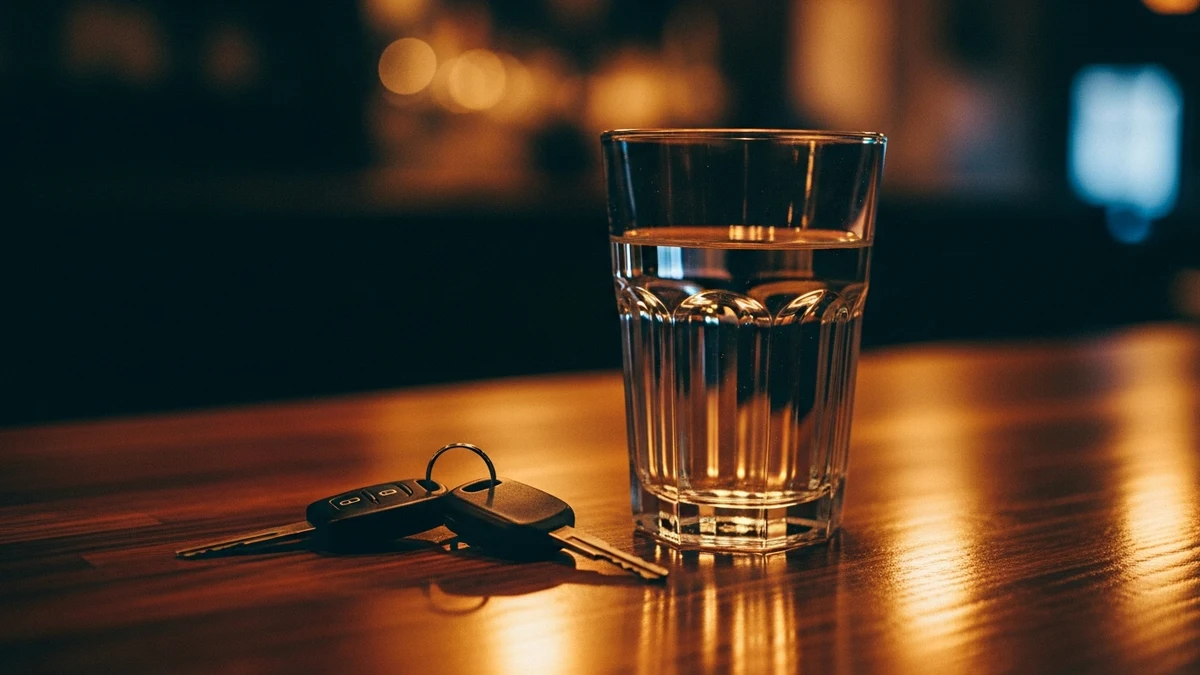
A drunk driving crash isn’t just a crash. It’s a crime AND a civil matter. The criminal case the prosecutor handles, and the civil case you and your family handle, run on parallel tracks. They address different things. Both matter.
If you’ve been hit by a drunk driver in Arizona, this guide walks through what’s happening and what to do.
Right Now: What Happens First
After a drunk driving crash, multiple processes start moving at once:
Police investigation
The responding officers will conduct field sobriety tests, breathalyzer or blood alcohol tests, and document the scene. The driver is typically arrested at the scene if they’re impaired.
Medical care
EMTs transport injured parties to the nearest hospital. Drunk driving crashes often produce serious injuries because impaired drivers don’t brake or take evasive action, so impacts tend to be at full speed.
Criminal case
The county attorney (Maricopa County Attorney’s Office in most Phoenix metro cases) reviews the police report and files criminal charges. Charges typically include DUI, aggravated DUI if applicable, endangerment, and (in fatal cases) manslaughter or negligent homicide.
Civil claim
Your personal injury or wrongful death claim is separate from the criminal case. You file it through your own attorney, against the driver and potentially against the bar that served them.
These tracks operate independently. The criminal case can take a year or more to resolve. Your civil claim doesn’t have to wait.
First Week: Start Your Civil Claim
Get medical attention and document everything
Photos, witness names, police report number, insurance information from all parties. Every one of these pieces feeds directly into the civil claim later, and adrenaline-masked injuries often surface over the first 72 hours, so the ER visit matters even if you “feel fine.”
Don’t talk to the drunk driver’s insurance
They’ll call you within days. Politely decline to give a recorded statement and refer them to your attorney.
Hire an attorney early
Drunk driving cases involve evidence preservation, criminal coordination, and dram shop investigation, all of which need to start within days. The longer you wait, the more video footage gets erased, witnesses move, and bars destroy receipts.
Identify where the driver was drinking
This is critical for dram shop liability. The investigation typically starts with the driver’s statements, credit card records, witness testimony, and the police report. If a licensed bar or restaurant served the driver while they were obviously intoxicated, your attorney can pursue a separate claim against the establishment under Arizona dram shop law.
Send preservation letters
Once the bar(s) are identified, your attorney sends spoliation letters demanding that surveillance video, receipts, and personnel records be preserved. Bar surveillance is often deleted within 7 to 30 days.
Document your injuries and recovery
Medical bills, lost wages, pain journal, photos of visible injuries. The civil case is built from this documentation.
Criminal Case vs Civil Case
The two tracks address different things:
Criminal case (prosecutor vs driver):
- Goal: punish the driver and protect the public
- Outcome: jail or prison, probation, fines, license suspension, ignition interlock
- Restitution: court-ordered payment for some victim losses, but typically limited
- Burden: proof beyond a reasonable doubt
- You don’t pay anything. The prosecutor handles it
Civil case (you vs driver and bar):
- Goal: compensate you and your family for losses
- Outcome: monetary damages
- Damages: medical bills, lost wages, pain and suffering, loss of consortium, punitive damages
- Burden: preponderance of the evidence (much lower than criminal)
- You hire an attorney (typically on contingency, no upfront cost)
You can pursue both. The criminal case doesn’t preclude the civil case. The two often interact: a guilty plea or conviction in the criminal case can be used as evidence in the civil case to establish liability.
Your Rights as a Victim
Arizona has a Victim’s Bill of Rights in the state constitution and codified in ARS 13-4401 and following. Key rights include:
- The right to be informed of all court proceedings
- The right to be present at criminal hearings, trial, and sentencing
- The right to be heard at sentencing
- The right to confer with the prosecutor before plea agreements
- The right to restitution ordered by the court
- The right to refuse to be interviewed by the defendant’s attorney or investigator
Make sure the prosecutor’s office knows you want to be involved. The Maricopa County Attorney’s Office has a Victim Services Division that will keep you updated and help you navigate the process. Don’t assume they have your contact information. Reach out and confirm.
Punitive Damages
Arizona allows punitive damages when a defendant acted with an “evil mind.” Drunk driving often meets this standard. The Arizona Supreme Court has held that getting behind the wheel after consuming significant amounts of alcohol can constitute conscious disregard for the safety of others, which is the punitive damages threshold.
Punitive damages serve two purposes: punish the defendant and deter similar conduct. They’re separate from compensatory damages and can significantly increase the total recovery.
Insurance companies generally don’t pay punitive damages on behalf of their insureds (though Arizona law on this is nuanced and policy-specific).
This means punitive damages may have to come from the defendant’s personal assets, which is often the driver’s wages garnished over time. In cases involving a bar, the bar’s commercial liability policy may cover punitive damages.
Restitution from the Criminal Case
Arizona judges can order restitution as part of a criminal sentence. Restitution typically covers documented economic losses: medical bills, funeral expenses, property damage, lost wages. It doesn’t cover pain and suffering or other non-economic damages.
To receive restitution, you have to:
Submit documentation of your losses
Provide your documented losses to the prosecutor or victim services office.
Attend the sentencing hearing or submit a written statement
Your presence or written statement allows the court to hear directly from you about the impact of your losses.
Establish a payment arrangement
The court usually sets up automated wage garnishment to collect restitution from the driver over time.
Restitution is helpful but rarely sufficient. Drunk drivers often have limited income and pay restitution slowly over years. The civil case is where the meaningful financial recovery happens for most families.
If a Family Member Died
If a family member died in the crash, the wrongful death claim is brought by the surviving spouse, children, parents, or personal representative under ARS 12-611 and 12-612. Damages include:
- Loss of companionship and society
- Loss of financial support
- Loss of household services
- Funeral and burial expenses
- The decedent’s medical expenses before death
- Loss of consortium
The two-year statute of limitations runs from the date of death, not the date of the underlying crash. Get an attorney involved early. The dram shop investigation, the criminal case coordination, and the evidence preservation all need to happen quickly.
How the Maricopa County Courts Handle It
The criminal DUI case runs through a specific court depending on severity. First-offense misdemeanor DUIs and most non-aggravated cases go to the municipal court or justice court where the crash happened, for example Phoenix Municipal Court, Glendale Municipal Court, or Peoria Justice Court.
Aggravated DUI charges (third DUI within 84 months, DUI with a child passenger under 15, DUI on a suspended license) are felonies and go to Maricopa County Superior Court in downtown Phoenix.
Wrong-way DUI fatalities and DUI manslaughter cases also land in Superior Court.
The civil case against the driver and any bar filing under dram shop law is filed in Maricopa County Superior Court when damages exceed $10,000, which they almost always do in a DUI injury case.
Small cases under $10,000 can go to justice court, but an injury case with an ER visit, physical therapy, and lost wages will almost always clear the Superior Court threshold.
Your attorney files the complaint and serves the defendants, and the case moves through discovery, depositions, and either settlement or trial over roughly 18 to 24 months.
Resources for Families
- MADD (Mothers Against Drunk Driving) Arizona: madd.org/arizona. Victim services, support groups, victim impact panel coordination.
- Arizona Department of Corrections Victim Services: corrections.az.gov victim services. State-level victim resources and compensation fund information.
- Maricopa County Attorney’s Office Victim Services: Contact through the county attorney’s main number.
- Arizona Crime Victims Compensation Fund: Up to $25,000 in compensation for crime victim out-of-pocket expenses. Apply through the county attorney’s office.
Talking to Insurance
The drunk driver’s insurance company will call you within days. Politely decline to give a recorded statement and refer them to your attorney.
The bigger insurance problem is usually coverage. If the driver’s policy isn’t enough, you have three places to look: your own underinsured motorist (UIM) coverage, the driver’s personal assets, and a dram shop claim against the bar that served them.
A drunk driver typically carries minimum liability insurance ($25,000 per person, $50,000 per accident). If you have serious injuries, that’s not enough. The driver’s personal assets are usually limited.
A bar or restaurant that served the driver carries commercial general liability insurance and liquor liability coverage with much higher limits, often $1 million or more per occurrence. Pursuing the dram shop claim opens access to that coverage.
For families dealing with catastrophic injuries or wrongful death, the dram shop angle can be the difference in how much insurance coverage is available to reach.
Arizona Deadlines
A drunk driving case has more than one clock, and the shortest one is easy to miss.
7 to 30 days: bar surveillance video
Not a legal deadline, but bar surveillance is often deleted within 7 to 30 days. Preservation letters need to go out before then.
1 year: dram shop claim against the bar
Arizona’s dram shop filing deadline isn’t settled law, and the strongest reading gives it just one year (ARS 12-541(5)). Treat it as due within one year.
2 years: personal injury claim against the driver
The personal injury claim against the driver gets two years from the crash (ARS 12-542).
2 years from the date of death: wrongful death
If a family member died, the wrongful death deadline runs two years from the date of death, not the date of the crash (ARS 12-542(2)).
Talk to a lawyer well before the one-year mark, so the bar’s deadline never becomes the reason a family loses access to that coverage.
What Not to Do
- Don’t give the drunk driver’s insurer a recorded statement.
- Don’t wait for the criminal case to finish before starting your civil claim.
- Don’t assume the prosecutor has your contact information. Reach out to Victim Services and confirm.
- Don’t count on restitution alone. It’s paid slowly and doesn’t cover pain and suffering.
- Don’t let the one-year dram shop window get close before a lawyer is looking for the bar.
- Don’t skip the ER, even if you feel fine.
When to Call Us
Call us if any of the following are true:
- You or a family member was seriously injured or killed
- The crash involved an impaired driver
- You’re not sure where the driver was drinking
- The driver’s insurance is offering less than your medical bills
- You want to understand your civil options
- You want help coordinating with the criminal case
AZ Law Now handles drunk driving injury cases throughout the West Valley and greater Phoenix area. Call (602) 654-0202 or start your free case review. Intake is confidential. Representation is on contingency.
Quick Recap
- The criminal case and your civil claim run separately. Start yours now.
- Get medical care and document everything.
- Don’t give the driver’s insurer a recorded statement.
- Get an attorney in early so the bar can be found before its video is erased.
- Treat the dram shop claim as due within one year; the claim against the driver gets two.
Frequently asked questions
What's the difference between the criminal case and the civil case?
Do I have to wait for the criminal case to finish before filing a civil claim?
Can I get punitive damages for being hit by a drunk driver?
What if the drunk driver doesn't have enough insurance?
How long do I have to file a wrongful death case in Arizona?
Sources & references
- Arizona State Legislature. (2025). ARS 13-4401: Victim's Bill of Rights https://www.azleg.gov/ars/13/04401.htm
- Arizona State Legislature. (2025). ARS 4-311: Dram Shop Liability https://www.azleg.gov/ars/4/00311.htm
- Arizona State Legislature. (2025). ARS 12-611: Wrongful Death Liability https://www.azleg.gov/ars/12/00611.htm
- Arizona State Legislature. (2025). ARS 12-542: Two-Year Statute of Limitations https://www.azleg.gov/ars/12/00542.htm
- Arizona Department of Corrections. (2025). Victim Services https://corrections.az.gov/office-deputy-directors/deputy-director-barcello/victim-services
Tell Google to show our reporting more often in Search and AI answers.