Premises Liability Lawyer in Buckeye, AZ
When a property owner's negligence causes an injury, Arizona law decides who's responsible by asking why you were there and what the owner should have done. Here's how it works in Buckeye, and how we build these cases. Contingency fee. No charge unless we recover.
Free, no obligation. Available 24/7.
- Millions Recovered for Arizona families
- 5.0 ★ 200+ Google reviews
- No Fees Unless you recover
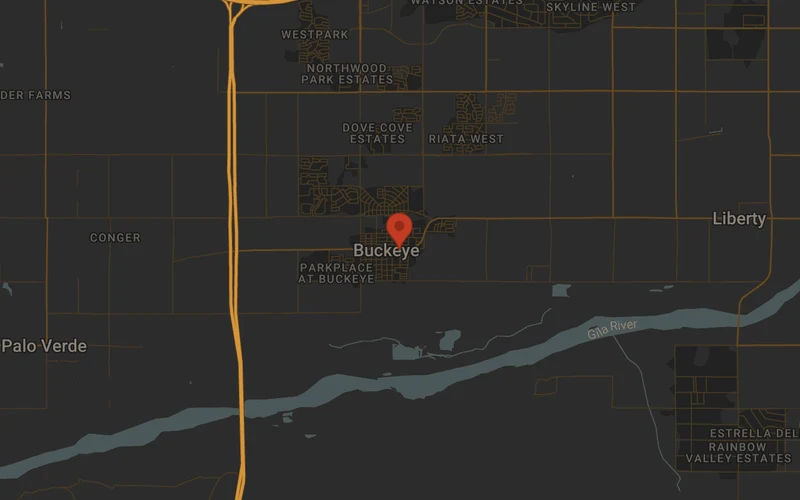
Premises liability covers every situation where a property owner's negligence causes an injury. It's much broader than slip and fall. It includes drownings in pools without compliant barriers, injuries to children at playgrounds and recreation fields, assaults where security was inadequate, and structural failures that should have been repaired.
Buckeye's growth has filled the West Valley with new homes, backyard pools, community parks, and youth sports facilities, and with them, new places where these injuries happen. This page walks through how premises liability works in Arizona, what it looks like in Buckeye, and the extra protection Arizona law gives to children.
Call (602) 654-0202 or use the intake form. The consultation is free. We don't charge unless we recover for you.
How Premises Liability Works in Arizona
Ron DeBrigida, J.D. reviews this section. Every premises liability case starts with the same question: why was the injured person on the property? Arizona follows the Restatement (Second) of Torts and assigns a different duty of care based on the answer.
Invitees are owed the highest duty
Invitees enter for the owner's commercial benefit or a purpose connected to the owner's business, shoppers, restaurant patrons, hotel guests, office visitors. Property owners owe invitees the highest duty: regularly inspect the premises, keep conditions safe, and warn of known dangers. Most Buckeye premises cases involve invitees at a business.
Licensees are owed a warning
Licensees have permission to be there but aren't there for the owner's benefit, social guests and neighbors. The owner has to warn licensees of known hidden dangers but doesn't have to inspect for hazards they don't know about.
Trespassers are owed the least, with one big exception
Trespassers are on the property without permission, and the owner owes them only the duty to refrain from willful or wanton harm. Arizona recognizes two exceptions. Known trespassers, people the owner knows regularly cross the property, are owed a warning about artificial dangers. And trespassing children are protected by the attractive nuisance doctrine, covered below.
Buckeye-Local Context: Pools, Parks, and New Construction
Buckeye's rapid growth changes the premises liability picture. New master-planned communities like Verrado, Tartesso, and Sundance come with backyard pools, shared amenities, community parks, and recreation fields as standard features. More pools mean more drowning risk. More parks and youth sports facilities mean more places where a child can be hurt by unsafe equipment or a lack of supervision. And new construction means new stores, apartment complexes, and parking structures where owners owe a duty to keep conditions safe.
Arizona's warm climate, year-round swimming season, and one of the highest rates of residential pool ownership in the country create a persistent drowning risk statewide. In a fast-growing pool community like Buckeye, that risk is part of daily life, and the law around pool barriers matters.
Child and Youth-Sports Injuries in Buckeye
Arizona gives children more protection than adults on someone else's property, because kids can't always recognize a danger an adult would. This is one of the most important parts of premises liability for Buckeye families.
The attractive nuisance doctrine
Under Section 339 of the Restatement (Second) of Torts, a property owner can be liable for injuries to a trespassing child when the property has a condition that attracts children and poses a risk they can't appreciate. Five things have to line up: the owner knows or should know children are likely to come onto the property, the condition involves an unreasonable risk of serious harm to children, the children are too young to understand the risk, the usefulness of keeping the condition is slight compared to that risk, and the owner failed to take reasonable care to eliminate the danger.
Swimming pools are the textbook example in Arizona. A young child drawn to a neighbor's unfenced pool can't grasp the danger, and that's exactly what the doctrine addresses.
Pool barriers under ARS 36-1681
ARS 36-1681 requires any residential pool deeper than 18 inches and wider than eight feet to be enclosed by a barrier that's at least five feet tall, has no openings wider than four inches, keeps bottom clearance to two inches or less, and has self-closing, self-latching gates. When a child drowns or nearly drowns in a pool that lacks a compliant barrier, the statutory violation is evidence of negligence, and combined with the attractive nuisance doctrine, these cases present strong liability. Our statewide investigation into Arizona child drownings traces how often these deaths follow a preventable barrier or supervision gap.
Playgrounds, school grounds, and recreation fields
Buckeye families use community parks, school playgrounds, and youth sports fields year-round. The entity that runs the facility, a homeowners association, the City of Buckeye, or a school, has a duty to keep it reasonably safe and reasonably supervised. Broken or defective play equipment, unsafe surfacing under a play structure, a known hazard on a sports field that went unfixed, or inadequate supervision at a rec program can all support a claim when a child is hurt.
Two things matter for these cases. First, if the playground, field, or pool is city-owned or school-owned, the government-claim rules apply, one year to file under ARS 12-821 and a 180-day notice of claim under ARS 12-821.01. Second, for the child's own injury claim, ARS 12-502 tolls the deadline until the child turns 18. Those two rules can point in different directions, so it's worth talking to us early rather than assuming a deadline has passed or that there's plenty of time.
Other Premises Liability Claims We Handle in Buckeye
Beyond pools and child injuries, premises liability covers several other categories that come up in a growing city.
Negligent security is one of the most common. Property owners have a duty to provide reasonable security when crime on the premises is foreseeable, and apartment complexes with broken locks or no lighting, parking structures with no surveillance, and venues with a known history of assaults can all face liability. Foreseeability is the key element, and prior incidents on or near the property are the strongest evidence.
Structural defects are another category, covering broken stairs, failed handrails, defective elevators, and crumbling walkways. When deferred maintenance causes a failure and someone is hurt, the owner is responsible. Inadequate lighting overlaps with both, since dark parking lots and unlit stairwells create fall hazards and security risks at the same time, and adequate lighting is a basic part of premises safety.
Deadlines and Damages
The standard deadline is two years from the date of injury under ARS 12-542. Government property claims have a one-year deadline under ARS 12-821 with the 180-day notice of claim under ARS 12-821.01. For a child's injury, ARS 12-502 tolls the statute of limitations until the child turns 18.
Arizona has no cap on compensatory damages in personal injury cases. Under the pure comparative fault rule in ARS 12-2505, any fault assigned to the injured person reduces the recovery by that percentage but never eliminates it. What a claim is worth depends on how clear the liability is, the severity and permanence of the injury, the available insurance coverage, and the documentation. Every case is different and is decided on its own facts, not a past result.
What It Costs to Hire Us
Nothing upfront. We handle every Buckeye premises liability case on contingency.
You don't pay us unless we recover money for you. No hourly rate, no retainer. Case costs may apply in some circumstances, but we discuss those in the intake call before we start. If we take your case and don't win, you owe us nothing for attorney fees.
Call (602) 654-0202 or use the intake form below. Hablamos espanol.
All Injury Cases in Buckeye
Premises liability is one part of what we handle in Buckeye. For the specific rules on falls in stores, restaurants, and apartment complexes, see our Buckeye slip and fall page. See the Buckeye injury law overview for car crashes, dog bites, truck crashes, and wrongful death at our HQ office at 715 Monroe Ave. For premises liability anywhere in Arizona, the Arizona premises liability overview covers statewide law in full.
Frequently asked questions
What is premises liability, and how does it work in Buckeye?
What is the attractive nuisance doctrine, and does it protect my child?
Are pool barriers required in Buckeye?
What if my child was hurt at a Buckeye playground or youth sports field?
Can I sue the City of Buckeye or a school for an injury on public property?
How long do I have to file a premises liability claim in Buckeye?
What does it cost to hire AZ Law Now for a Buckeye premises liability case?
Attorney advertising. Past results do not guarantee a similar outcome. Every case is different and is decided on its own facts.
WHAT CLIENTS SAY
In their words
After my car accident, I was overwhelmed and unsure of what to expect, but working with this law firm was the best decision I could have made. They were compassionate, attentive, and incredibly thorough. Every question I had was answered, and I never felt like “just another case.”
Brandon did a phenomenal job handling my case! Not only did he do that he checked on numerous of times on how my recovery was going and myself in general. As well as my family! He handled my case with patience and care and had the best interest in what i was wanting and best results! Everything was in a great timely matter! I appreciate him and his team tremendously for everything! Highly recommend them to EVERYONE!!
AZ Law Now was amazing, they truly helped me get the best situation out of my case. They guided me, took the time to explain what was happening and kept me informed every step of the way. Communication was such a key thing, was able to access them for whatever questions i had at any moment.
Past results do not guarantee future outcomes.
You get answers.
Review My CaseFree, no obligation. Available 24/7. No fees unless you recover. Case costs are separate, and we'll walk you through them before you sign.
Millions recovered · 5.0 rating across 200+ Google reviews