Slip and Fall Lawyer in Buckeye, AZ
A fall on someone else's property comes down to one question: should the owner have known about the hazard? We know how to prove notice, what to document, and the deadlines that catch people off guard. Contingency fee. No charge unless we recover.
Free, no obligation. Available 24/7.
- Millions Recovered for Arizona families
- 5.0 ★ 200+ Google reviews
- No Fees Unless you recover
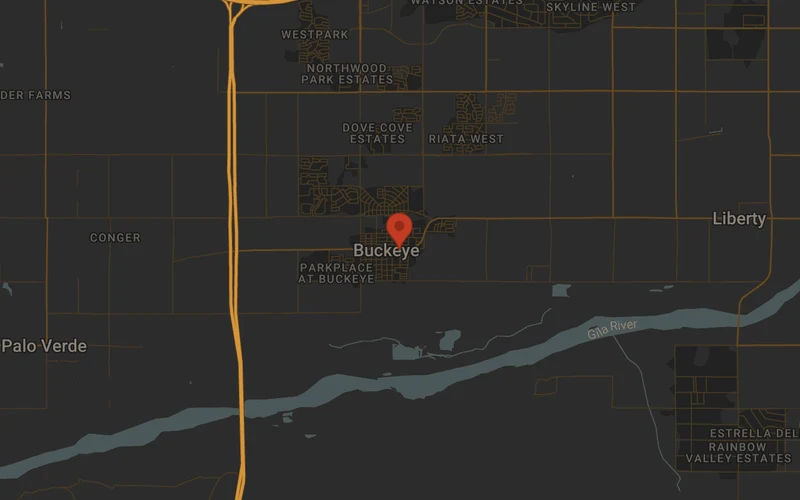
Buckeye has been one of the fastest-growing cities in the country, and that growth shows up as new grocery stores, restaurants, retail centers, and apartment complexes across Watson Road, Verrado Way, and the Sun Valley Parkway corridor. More businesses and more foot traffic mean more places where a wet floor, a broken step, or a poorly lit walkway sends someone to the ER.
If you slipped or tripped and got hurt on someone else's property in Buckeye, this page explains the notice rule that makes or breaks these cases, the duty a property owner owes you, and the deadlines you can't afford to miss.
Call (602) 654-0202 or use the intake form. The consultation is free. We don't charge unless we recover for you.
The Notice Requirement: What Actually Wins a Buckeye Case
Proving a hazard existed isn't enough. The property owner has to have had notice of it. Arizona recognizes two kinds, and every slip and fall case turns on which one you can prove.
Actual notice means the owner was directly told, and it takes many forms: an employee reported the spill, a tenant complained about the broken stair, or the store manager already knew the cooler case was leaking. Any direct communication counts.
Constructive notice is the harder one, and it means the hazard sat there long enough that a reasonable owner doing regular inspections should have found it. A puddle that pooled for an hour on a store floor with no inspection routine is far easier to prove than a spill from five minutes ago. The key question is the inspection schedule. If a store checks its floors every 30 minutes but the last check was two hours ago, that gap is evidence, and if there's no inspection policy at all, the absence of one is itself evidence of negligence.
The Duty a Property Owner Owes You
Ron DeBrigida, J.D. reviews this section. Arizona law sorts everyone on someone else's property into three categories, and the category sets the duty.
Invitees are people there for a business purpose, customers in a store, clients in an office, patrons in a restaurant, and they're owed the highest duty. The owner has to regularly inspect for hazards, keep conditions safe, and warn of known dangers that can't be fixed right away. Most Buckeye slip and fall claims are invitee cases.
Licensees are people there with permission but for their own purpose, like a social guest, and the owner has to warn them of known hidden dangers but doesn't have to inspect for unknown ones. Trespassers are there without permission and are owed only the duty not to cause willful or wanton harm, with one big exception: the attractive nuisance doctrine, which protects trespassing children from dangerous conditions like unfenced pools.
Arizona Slip and Fall Law That Applies in Buckeye
These are the statutes that come up in every Buckeye slip and fall case.
The statute of limitations is two years from the date of the fall to file a personal injury lawsuit under ARS 12-542. If the fall happened on government property, a City of Buckeye sidewalk, a public park, or a school, the deadline drops to one year under ARS 12-821, and a 180-day notice of claim under ARS 12-821.01 comes first. That 180-day clock runs fast and starts from the date of injury.
Arizona also follows pure comparative fault under ARS 12-2505, so it doesn't bar recovery if you share some blame. Your compensation gets reduced by your fault percentage, but never eliminated. Even at 49 percent fault, you recover 51 percent of your damages. Adjusters are trained to argue you weren't watching where you walked or wore the wrong shoes, and we counter with the evidence.
Falls on City of Buckeye or public school property trigger the one-year deadline and 180-day notice above. Punitive damages aren't available against government entities under ARS 12-820.04, but compensatory damages are. A public entity can't claim immunity for failing to keep its property safe, because that's an operational duty, not a protected policy decision.
What We Investigate on Buckeye Slip and Fall Cases
Every case starts with evidence, and it disappears fast. Surveillance footage gets overwritten, floors get mopped, and conditions change. Here's what we move on right away.
Surveillance and incident records come first. Stores, restaurants, and apartment complexes along Watson Road and Verrado Way run camera systems, and the footage overwrites on short cycles, so we send preservation letters early and pull the store's incident report, maintenance logs, and floor-inspection records. Those inspection records carry the most weight, because constructive notice cases live or die on the inspection schedule, and we compare the owner's cleaning and inspection policy to what actually happened the day you fell.
Your own documentation matters just as much. If you fell, photograph the hazard, the surrounding area, your footwear, and your injuries before anything is cleaned up, and ask for a written incident report. Get witness names. Evidence from the first hour is the most valuable, and we tell every client the same thing.
Damages in Buckeye Slip and Fall Cases
Arizona has no cap on compensatory damages in personal injury cases. That means economic damages, medical bills, lost wages, and future care costs, and non-economic damages, pain and suffering and loss of quality of life, are evaluated without an arbitrary limit.
Slip and fall injuries range from sprains and fractures to traumatic brain injuries and spinal damage, and falls are the leading cause of traumatic brain injury in adults over 65. What you can recover depends on the severity of your injuries, how the fall affects your ability to work, and the property owner's insurance coverage. Every case is different and is decided on its own facts, not a past result.
What It Costs to Hire Us
Nothing upfront. We handle every Buckeye slip and fall case on contingency.
You don't pay us unless we recover money for you. No hourly rate, no retainer. Case costs may apply in some circumstances, but we discuss those in the intake call before we start. If we take your case and don't win, you owe us nothing for attorney fees.
Call (602) 654-0202 or use the intake form below. Hablamos espanol.
All Injury Cases in Buckeye
Slip and fall claims are one part of what we handle in Buckeye. See the Buckeye injury law overview for car crashes, dog bites, truck crashes, and wrongful death at our HQ office at 715 Monroe Ave. For the broader property-owner duty that covers pools, negligent security, and structural defects, see our Buckeye premises liability page. For slip and fall claims anywhere in Arizona, the Arizona slip and fall overview covers statewide law in full.
Frequently asked questions
How long do I have to file a slip and fall claim in Buckeye?
What do I have to prove in a Buckeye slip and fall case?
What if I was partly at fault for my fall?
Does it matter why I was on the property when I fell?
What if I fell at a new Buckeye store or restaurant with no warning sign?
What does it cost to hire AZ Law Now for a Buckeye slip and fall case?
Can I sue my Buckeye landlord for a fall in my apartment complex?
Attorney advertising. Past results do not guarantee a similar outcome. Every case is different and is decided on its own facts.
WHAT CLIENTS SAY
In their words
After my car accident, I was overwhelmed and unsure of what to expect, but working with this law firm was the best decision I could have made. They were compassionate, attentive, and incredibly thorough. Every question I had was answered, and I never felt like “just another case.”
Brandon did a phenomenal job handling my case! Not only did he do that he checked on numerous of times on how my recovery was going and myself in general. As well as my family! He handled my case with patience and care and had the best interest in what i was wanting and best results! Everything was in a great timely matter! I appreciate him and his team tremendously for everything! Highly recommend them to EVERYONE!!
AZ Law Now was amazing, they truly helped me get the best situation out of my case. They guided me, took the time to explain what was happening and kept me informed every step of the way. Communication was such a key thing, was able to access them for whatever questions i had at any moment.
Past results do not guarantee future outcomes.
You get answers.
Review My CaseFree, no obligation. Available 24/7. No fees unless you recover. Case costs are separate, and we'll walk you through them before you sign.
Millions recovered · 5.0 rating across 200+ Google reviews