Truck Accident Lawyer in Buckeye, AZ
I-10 carries heavy commercial truck traffic west of Loop 303. When a semi hits a passenger car on this corridor, 97 percent of deaths are in the car. We pull FMCSA records, ELD data, and trace chameleon carriers. Contingency fee.
Free, no obligation. Available 24/7.
- Millions Recovered for Arizona families
- 5.0 ★ 200+ Google reviews
- No Fees Unless you recover
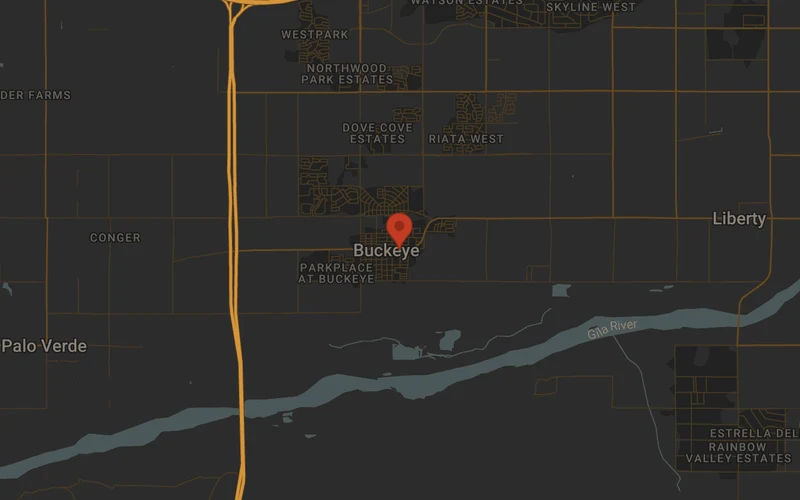
I-10 between Loop 303 and Tonopah carries heavy commercial truck traffic. Buckeye's main freight corridor is packed with semis, tankers, and flatbeds running to Yuma, Los Angeles, and the distribution centers lining I-10 on both sides. When a truck hits a passenger car at highway speed, the physics don't favor the car. NHTSA data shows 97 percent of deaths in truck-car collisions are in the passenger vehicle.
A truck hit you, or someone in your family, on I-10 near Buckeye. This page explains what makes these cases different from car crash cases, which records we pull, and what chameleon carriers are and why they matter.
Call us at (602) 654-0202. The consultation is free. We don't charge unless we recover.
The I-10 Freight Corridor Through Buckeye
I-10 through Buckeye is one of the highest-volume freight corridors in the Southwest. The speed limit reaches 75 mph west of Estrella Parkway. Trucks run at 65 mph in the right lane. That 10 mph speed differential creates compression points where passenger vehicles stack up behind semis and try to pass in tight windows.
The I-10 crash data investigation covers this corridor. ADOT's records show 446 crashes there in 2025, about 1 in 5 involving a truck, and 26 deaths since 2020. Long stretches west of SR-85 have no median barrier. The Walmart distribution facility near I-10 and Loop 101 added significant truck volume to the mix in 2024.
I-10 construction zones between Verrado Way and Loop 303 run through 2028. Lane narrowing, abrupt pavement transitions, and changed merge points in active construction areas increase crash risk for all vehicles, but trucks carrying full loads have less stopping distance and less maneuverability when something goes wrong ahead of them.
Chameleon Carriers: The Problem You Can't See
The ghost fleets and chameleon carriers investigation covers this in detail. The short version: some trucking companies dissolve their DOT registration after accumulating safety violations or crashes, then re-form under a new company name and new DOT number. The safety record disappears. The carrier gets a clean slate on FMCSA's SAFER system.
National estimates suggest 10 to 20 percent of carriers operate somewhere in this spectrum. On I-10 through Buckeye, with 8,000-plus trucks per day, that's potentially hundreds of trucks daily running with erased safety histories. Arizona DPS operates its weigh stations with 87 of 115 authorized enforcement positions filled. The primary port of entry from California runs four days a week.
In a truck crash case, identifying whether the carrier is a chameleon operation changes everything about how we trace liability. We pull the carrier's ownership history, registered agent records, and prior DOT numbers through FMCSA's licensing and insurance system. If the carrier dissolved and restarted, we look for successor liability or piercing the corporate veil.
What We Pull on Every Buckeye Truck Crash Case
Truck crash investigations differ from car crash cases in volume of evidence and in the speed required to preserve it.
FMCSA carrier safety record. The carrier's out-of-service rate, crash history, inspection violations, and current safety rating from FMCSA's SAFER database. If the carrier has a conditional or unsatisfactory rating, that's admissible evidence of negligent entrustment.
Driver qualification file. The carrier must maintain a file on every driver: CDL record, medical certificate, drug test results, previous employment verification. If a carrier skipped the qualification steps or kept a driver on despite a revoked medical certificate, that's direct negligence.
Electronic logging device data. Federal law requires ELDs on most commercial trucks. The ELD records hours driven, rest periods, and speed. It establishes whether the driver was in violation of hours-of-service limits at the time of the crash. Carriers can claim ELD data is proprietary. We subpoena it.
Truck event data recorder. Similar to a car's black box. Records pre-crash speed, braking, steering input, and engine data. Combined with the ELD, it creates a picture of what the driver was doing in the seconds before impact.
ADOT crash report and AZDPS inspection data. The state crash report codes contributing factors. If prior inspections flagged vehicle violations on this carrier or this truck, that data supports a pattern of negligence.
Trucking Company Rapid Response: Why Speed Matters
Major carriers deploy rapid-response legal teams to crash scenes within hours. They're not there to help you. They're preserving evidence for their defense and looking for anything that can be used to reduce the carrier's liability. By the time you've been discharged from the hospital, their team may have already photographed the scene, interviewed the driver, and started building their case.
We send spoliation letters to carriers the same day we take a case. A spoliation letter puts the carrier on legal notice that it must preserve all evidence. Destroying or overwriting evidence after receiving a spoliation letter exposes the carrier to sanctions and adverse inference instructions at trial.
The ELD data, the driver's phone records, the truck's dashcam footage, and the carrier's internal incident report: all of it can disappear if nobody demands preservation within the first 24 to 48 hours.
Arizona Law in Truck Crash Cases
Ron DeBrigida, J.D. reviews this section.
Statute of limitations (ARS 12-542). Two years from the date of the crash. Two years from the date of death for wrongful death under ARS 12-542(2). In truck cases, the practical deadline is much shorter because evidence disappears. Don't wait.
Respondeat superior. Arizona recognizes employer liability for employees acting within the scope of employment. A truck driver on a delivery run is acting in the scope of employment. The carrier is vicariously liable for the driver's negligence.
Pure comparative fault (ARS 12-2505). Trucking defense teams try to assign fault to other drivers, road conditions, or you. Arizona's comparative fault system means your recovery gets reduced by your fault percentage, not eliminated. We build the evidence to keep your fault percentage low.
FMCSA federal regulations. Hours-of-service limits, drug and alcohol testing requirements, and vehicle maintenance standards are federal regulations that apply in state court. A driver who exceeded their hours limit or a carrier that skipped mandatory drug testing is in violation of federal law, which supports a negligence per se claim.
What It Costs
Nothing upfront. We handle every Buckeye truck crash case on contingency. You don't pay unless we recover. We front the investigation costs, including FMCSA record pulls, expert consultations, and crash reconstruction if needed.
Call (602) 654-0202 or use the intake form. Hablamos espanol.
All Injury Cases in Buckeye
Truck crashes are one part of what we handle in Buckeye. See the Buckeye injury law overview for car crashes, motorcycle cases, wrongful death, and other case types. For truck accident cases across Arizona, the Arizona truck accident overview covers statewide law and carrier liability patterns.
Frequently asked questions
How long do I have to file a truck accident lawsuit in Buckeye?
Can I sue the trucking company and not just the driver?
What records do you pull on a Buckeye truck crash case?
What are chameleon carriers and why do they matter on I-10?
What is Arizona comparative fault and how does it affect my truck case?
What does it cost to hire AZ Law Now for a truck crash case?
Attorney advertising. Past results do not guarantee a similar outcome. Every case is different and is decided on its own facts.
WHAT CLIENTS SAY
In their words
After my car accident, I was overwhelmed and unsure of what to expect, but working with this law firm was the best decision I could have made. They were compassionate, attentive, and incredibly thorough. Every question I had was answered, and I never felt like “just another case.”
Brandon did a phenomenal job handling my case! Not only did he do that he checked on numerous of times on how my recovery was going and myself in general. As well as my family! He handled my case with patience and care and had the best interest in what i was wanting and best results! Everything was in a great timely matter! I appreciate him and his team tremendously for everything! Highly recommend them to EVERYONE!!
AZ Law Now was amazing, they truly helped me get the best situation out of my case. They guided me, took the time to explain what was happening and kept me informed every step of the way. Communication was such a key thing, was able to access them for whatever questions i had at any moment.
Past results do not guarantee future outcomes.
You get answers.
Review My CaseFree, no obligation. Available 24/7. No fees unless you recover. Case costs are separate, and we'll walk you through them before you sign.
Millions recovered · 5.0 rating across 200+ Google reviews