Motorcycle Accident Lawyer in Buckeye, AZ
SR-85, I-10, Watson Road. If you were hit on a West Valley corridor, we know the intersections, the ADOT data, and what it takes to build a motorcycle case here. Contingency fee. No charge unless we recover.
Free, no obligation. Available 24/7.
- Millions Recovered for Arizona families
- 5.0 ★ 200+ Google reviews
- No Fees Unless you recover
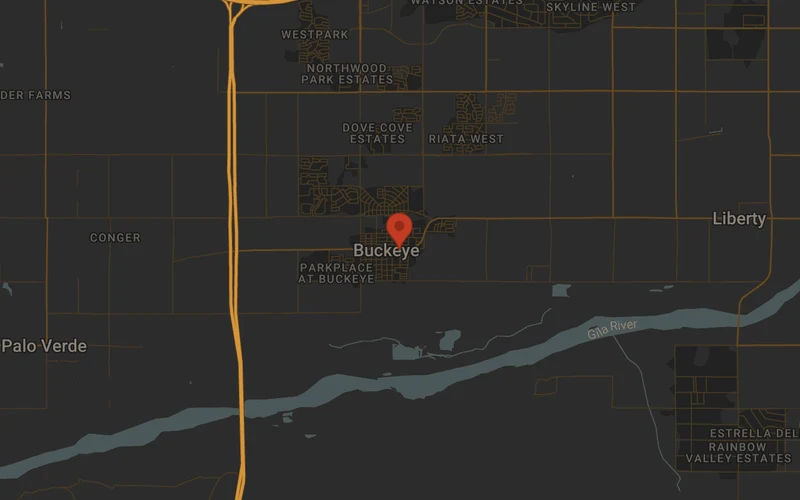
Buckeye's roads weren't built for the traffic they're carrying. SR-85 connects I-10 to I-8 through terrain that mixes commuter cars, freight trucks, and riders who know the West Valley is the cheapest place left to live near Phoenix. That corridor is where motorcycle crashes concentrate.
If you were hit on SR-85, I-10, Watson Road, or any other Buckeye arterial, you're dealing with a crash pattern we see often. This page explains what makes Buckeye motorcycle cases different, which Arizona laws apply, and what we investigate when we take one.
You can call us at (602) 654-0202 or use the intake form. The consultation is free. We don't charge unless we recover for you.
Why Buckeye Motorcycle Crashes Are Different
Buckeye is the fastest-growing city in the United States by percentage. More than 124,000 people live here now. The roads serving those residents were permitted and built for a fraction of that volume. That gap between population and infrastructure is the core crash risk.
SR-85 is the main north-south spine. It carries freight from I-10 to I-8, commercial trucks running to Yuma, and daily commuters heading north to Phoenix jobs. Speed limits run 45 to 65 mph depending on the segment. The same corridor that handles heavy truck volume also has residential streets, farm access roads, and signal intersections where drivers make left turns across oncoming traffic.
That left-turn pattern is the single most common fatal motorcycle crash type nationally. NHTSA data shows 46 percent of fatal two-vehicle motorcycle crashes involve a vehicle turning left while the motorcycle travels straight. At SR-85 speeds, riders have almost no margin when a turning driver misjudges their approach.
I-10 adds a different problem. The speed limit hits 75 mph west of Estrella Parkway. This stretch carries heavy commercial truck traffic. The I-10 crash data investigation covers this corridor, where ADOT's records show 446 crashes in 2025 and 26 deaths since 2020. Motorcycles on I-10 face the same physics problem as any other vehicle, but without a crumple zone, airbag, or seatbelt.
Low-light commutes add exposure that inland Arizona riders sometimes underestimate. Buckeye-to-Phoenix commuters leave before sunrise. Sun Valley Parkway, Verrado Way, and Watson Road carry early-morning traffic through stretches with no median lighting and wide intersections where sight distance is limited in the dark.
Arizona Motorcycle Law That Applies at Intake
These are the statutes that come up in every Buckeye motorcycle case. Ron DeBrigida, J.D. reviews this section.
Helmet law (ARS 28-964). Arizona doesn't require adult riders to wear helmets. Riders 18 and older can choose. If you weren't wearing a helmet and you were injured, the other side will argue your head injuries were worse because of that choice. Arizona's comparative fault system (ARS 12-2505) means they can reduce your damages by your assigned fault percentage. An attorney separates causation from severity: not wearing a helmet doesn't cause the crash.
Pure comparative fault (ARS 12-2505). Arizona is a pure comparative fault state. If you were 25 percent at fault for the crash, you recover 75 percent of your damages. There's no cutoff. Even at 49 percent fault, you still recover. Insurance companies know this and will try to push your fault percentage as high as possible to reduce what they pay.
Minimum liability limits (ARS 28-4009). Arizona drivers must carry at least $25,000 per person, $50,000 per accident in bodily injury coverage, and $15,000 in property damage coverage. Many Buckeye drivers carry only minimums. If your injuries exceed those limits, we look at your own underinsured motorist coverage and any other liable parties, including road design entities if a government road defect contributed.
Statute of limitations (ARS 12-542). You have two years from the date of the crash to file a personal injury lawsuit. For wrongful death, two years from the date of death under ARS 12-542(2). If a government road defect contributed to the crash, ARS 12-821.01 requires a notice of claim within 180 days. That 180-day deadline runs first and is the one people miss.
No-fault doesn't apply. Arizona uses an at-fault system. The driver who caused the crash is responsible, through their liability insurance or out of pocket. You don't file with your own insurer first unless you're using uninsured motorist coverage.
What We Investigate on Buckeye Motorcycle Cases
Every motorcycle case starts with evidence. What we pull depends on the crash type.
ADOT crash report and signal timing. The Arizona Crash Information System has intersection-level data. For crashes at signalized intersections on SR-85 or Watson Road, we pull the crash diagram, the contributing factors coded by the responding officer, and wherever available, the signal timing data from ADOT's traffic operations system. Signal timing matters in left-turn crashes. A poorly timed protected phase creates a window where drivers think they can turn.
FMCSA records for commercial vehicle cases. If a truck was involved, we pull the carrier's FMCSA safety record, the driver's qualification file, and hours-of-service logs. The I-10 corridor investigation documents why commercial vehicle crashes on this stretch follow specific patterns tied to carrier safety ratings. Trucking companies have response teams. We match that pace.
Helmet damage analysis. If you were wearing a helmet, the damage pattern tells a story. Impact location, penetration depth, and liner compression indicate where and how hard your head hit. That evidence matters when the insurer argues the helmet was inadequate or that a different helmet would have changed the outcome.
Road surface evidence on SR-85. SR-85 has segments with deteriorating surface conditions, especially at older intersection approaches. Gravel intrusion, uneven pavement transitions, and edge drop-offs create hazards specific to motorcycles. If road condition contributed to your crash, the responsible government entity may share liability. That's the 180-day notice of claim deadline territory.
Surveillance and dashcam footage. Businesses along SR-85, Watson Road, and the I-10 frontage roads have cameras. We send spoliation letters within 24 to 48 hours. Footage overwrites on 30-day cycles.
Buckeye Intersections and West Valley Specifics
Signal timing on SR-85 and Watson Road has been an active issue in West Valley transportation planning. Buckeye's rapid growth means signal plans written for 2015 traffic volumes are still running on roads carrying two or three times that volume. Protected left-turn phases that were adequate for lower volumes leave gaps in traffic separation at higher ones.
The Watson Road and Yuma Road intersection concentrates specific crash risk. Both roads carry high volumes of local traffic, and the intersection geometry creates crossing conflicts for northbound riders. Our Watson and Yuma intersection investigation documents the crash pattern and the signal timing data.
Sun Valley Parkway connects northwest Buckeye communities to SR-85 and I-10. It's a wide, divided arterial running 45 to 55 mph through partially developed land. Wide lanes, long sight distances, and high speeds create conditions where drivers underestimate motorcycle approach speed. That combination shows up repeatedly in motorcycle crash data on similar West Valley roads.
The I-10 construction zones west of Verrado Way run through 2028. Construction zone crashes on I-10 increased 34 percent between 2022 and 2024 per ADOT data. Motorcycles are especially vulnerable in construction zones where lane widths narrow, pavement transitions are abrupt, and drivers are distracted by signage changes.
What It Costs to Hire Us
Nothing upfront. We handle every Buckeye motorcycle case on contingency.
That means you don't pay us unless we recover money for you. No hourly rate. No retainer. If we take your case and we don't win, you owe us nothing for attorney fees. Case costs may apply in some circumstances, but we discuss those in the intake before we start.
The first consultation is free. We'll listen to what happened, tell you whether we think you have a case, and explain what the process looks like from intake to resolution. No pressure, no obligation.
Call (602) 654-0202 or use the intake form below. Hablamos espanol.
All Injury Cases in Buckeye
Motorcycle crashes are one part of what we handle in Buckeye. See the Buckeye injury law overview for car accidents, truck crashes, wrongful death, and other case types at our HQ office at 715 Monroe Ave. For motorcycle cases anywhere in Arizona, the Arizona motorcycle accident overview covers statewide law and patterns.
Frequently asked questions
How long do I have to file a motorcycle accident lawsuit in Buckeye?
Does Arizona require motorcycle helmets in Buckeye?
Can I still recover if I was partially at fault on SR-85?
What if the driver who hit me on I-10 was in a commercial truck?
What does it cost to hire AZ Law Now for a Buckeye motorcycle case?
What is the minimum insurance coverage a driver needs in Arizona?
Attorney advertising. Past results do not guarantee a similar outcome. Every case is different and is decided on its own facts.
WHAT CLIENTS SAY
In their words
After my car accident, I was overwhelmed and unsure of what to expect, but working with this law firm was the best decision I could have made. They were compassionate, attentive, and incredibly thorough. Every question I had was answered, and I never felt like “just another case.”
Brandon did a phenomenal job handling my case! Not only did he do that he checked on numerous of times on how my recovery was going and myself in general. As well as my family! He handled my case with patience and care and had the best interest in what i was wanting and best results! Everything was in a great timely matter! I appreciate him and his team tremendously for everything! Highly recommend them to EVERYONE!!
AZ Law Now was amazing, they truly helped me get the best situation out of my case. They guided me, took the time to explain what was happening and kept me informed every step of the way. Communication was such a key thing, was able to access them for whatever questions i had at any moment.
Past results do not guarantee future outcomes.
You get answers.
Review My CaseFree, no obligation. Available 24/7. No fees unless you recover. Case costs are separate, and we'll walk you through them before you sign.
Millions recovered · 5.0 rating across 200+ Google reviews