Truck Accident Lawyer in Goodyear, AZ
I-10 carries heavy commercial truck traffic through Goodyear. When a semi hits a passenger car, 97 percent of deaths are in the car. We pull FMCSA records, ELD data, and trace chameleon carriers. Contingency fee. Ten minutes from our Buckeye HQ.
Free, no obligation. Available 24/7.
- Millions Recovered for Arizona families
- 5.0 ★ 200+ Google reviews
- No Fees Unless you recover
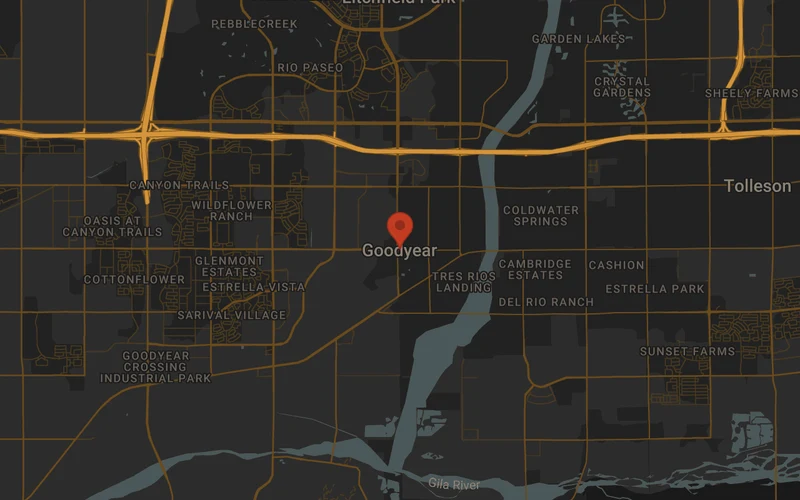
I-10 through Goodyear carries heavy commercial truck traffic. Speed limits reach 75 mph. The Walmart distribution facility near I-10 and Loop 101 added substantial truck volume to this corridor in 2024. When a semi hits a passenger car at highway speed on this stretch, NHTSA data shows 97 percent of deaths are in the passenger vehicle.
A commercial truck hit you, or someone in your family, on I-10 near Goodyear. This page explains what makes truck crash cases different from car crash cases, which records we pull, and why chameleon carriers matter on this corridor.
Call us at (602) 654-0202. Consultation is free. We don't charge unless we recover.
The I-10 Freight Corridor Through Goodyear
The I-10 crash data investigation covers the corridor from Goodyear west through Buckeye. In Goodyear, the core hazard is the mix of 75-mph speed limits and heavy truck traffic moving slower than the cars around it. Trucks hold 65 mph in the right lane. Passenger cars stack behind them and try to pass.
The interchange geometry at Litchfield Road, Estrella Parkway, and Bullard Avenue creates merge conflicts where vehicles entering I-10 from the ramp have to match highway speed while trucks are already at full speed in the right lane. A truck that doesn't yield during a merge, or a car that hesitates in the acceleration lane, produces a closing-speed collision that the passenger vehicle loses.
Construction zones between Verrado Way and Loop 303 also affect Goodyear traffic. Lane narrowing, shifted merge points, and driver distraction from signage changes in construction zones reduce the margin for error that trucks already have limited amounts of.
Chameleon Carriers on the Goodyear I-10 Corridor
The ghost fleets and chameleon carriers investigation details how some trucking companies dissolve their DOT registration after accumulating safety violations, then re-form under a new company name and DOT number. The safety record disappears from FMCSA's SAFER system. The carrier appears clean.
National estimates suggest 10 to 20 percent of carriers operate somewhere in this spectrum. I-10 through Goodyear, with more than 8,000 trucks per day, puts hundreds of potentially chameleon carriers on this road daily. Arizona DPS runs its weigh stations with 87 of 115 authorized positions filled. The primary California port of entry operates four days per week.
In a truck crash case involving a chameleon carrier, liability tracing changes significantly. We look at the carrier's ownership history through FMCSA's licensing and insurance database, registered agent records, and prior DOT numbers. If the carrier dissolved and restarted, we look for successor liability or piercing the corporate veil.
What We Pull on Every Goodyear Truck Crash Case
FMCSA carrier safety record. The carrier's out-of-service rate, crash history, inspection violations, and current safety rating. A conditional or unsatisfactory rating supports a negligent entrustment claim.
Driver qualification file. CDL record, medical certificate, drug test results, and previous employment verification. A carrier that skipped these steps or retained a driver despite a suspended CDL is directly negligent.
Electronic logging device data. Federal law requires ELDs on most commercial trucks. The ELD records hours driven, rest periods, and speed. A driver who exceeded hours-of-service limits is in violation of federal regulation, which supports a negligence per se claim. Carriers can claim ELD data is proprietary. We subpoena it.
Truck event data recorder. Records pre-crash speed, braking, and steering. Combined with the ELD, it builds a picture of driver conduct in the seconds before impact.
Vehicle maintenance records. Federal regulations require commercial carriers to maintain inspection and maintenance records. Brake failures, tire blowouts, and lighting failures that result from deferred maintenance are evidence of carrier negligence.
Trucking Carrier Rapid Response
Major carriers deploy rapid-response legal teams to crash scenes within hours. They show up at the scene, photograph everything, interview the driver, and start building their defense before you've left the hospital. They preserve what helps them. The rest can get overwritten.
We send spoliation letters to carriers the same day we take a case. A spoliation letter puts the carrier on legal notice to preserve all evidence. Destroying or overwriting data after receiving a spoliation letter exposes the carrier to sanctions and adverse inference instructions at trial.
Arizona Law in Goodyear Truck Crash Cases
Ron DeBrigida, J.D. reviews this section.
Statute of limitations (ARS 12-542). Two years from the crash date. Two years from the death date for wrongful death under ARS 12-542(2). The practical deadline in truck cases is much shorter because evidence disappears fast.
Respondeat superior. Arizona holds carriers vicariously liable for their drivers' conduct when the driver was acting within the scope of employment. A driver on a delivery route is acting in scope. The carrier pays.
Pure comparative fault (ARS 12-2505). Trucking defense teams try to push fault onto you. Arizona's comparative fault system reduces your recovery by your fault percentage but doesn't eliminate it. We build the evidence to keep that percentage low.
FMCSA federal regulations. Hours-of-service limits, drug and alcohol testing requirements, and vehicle maintenance standards are federal regulations. Violation of a federal safety regulation in a state court case supports a negligence per se claim.
What It Costs
Nothing upfront. Contingency representation. You don't pay unless we recover. We front investigation costs including FMCSA record pulls, expert consultations, and crash reconstruction if needed.
Call (602) 654-0202 or use the intake form. Hablamos espanol.
All Injury Cases in Goodyear
Truck crashes are one part of what we handle in Goodyear. See the Goodyear injury law overview for car crashes, motorcycle cases, wrongful death, and other case types. Our Buckeye HQ is ten minutes from Goodyear. For truck accident cases across Arizona, the Arizona truck accident overview covers statewide law and carrier liability patterns.
Frequently asked questions
How long do I have to file a truck accident lawsuit in Goodyear?
Can I sue the trucking company in addition to the driver?
What are chameleon carriers and why does it matter on I-10 near Goodyear?
What records do you pull on a Goodyear truck crash case?
What does Arizona comparative fault mean for my truck crash case?
What does it cost to hire AZ Law Now for a Goodyear truck crash case?
Attorney advertising. Past results do not guarantee a similar outcome. Every case is different and is decided on its own facts.
WHAT CLIENTS SAY
In their words
Brendan has been an incredible source of support as I navigate my personal injury law claim. The incident involving my infant at the daycare has truly turned my world upside down. Through it all, Brendan has instilled hope in me during these challenging times. I am deeply grateful for every moment he has dedicated to helping my family through this difficult journey.
When I got injured, I was looking for an advocate who would take the time to understand my unique circumstance and be honest and empathetic. I found AZ Law Now and immediately felt at ease with them and got the personalized attention I wanted that I wouldn't have received at the big firms. I also got a great outcome as well. Highly recommend them.
Thanks to Brendan and his team for helping me in a hard time. Dealing with your own insurance who refuses to help you out can get mentally exhausting. Stephanie was always so kind, helpful and gentle with the whole process. Even better it took way less time than I was expecting and got way more than I would have got from Kemper insurance on my own. Highly recommend! Thanks again
Past results do not guarantee future outcomes.
You get answers.
Review My CaseFree, no obligation. Available 24/7. No fees unless you recover. Case costs are separate, and we'll walk you through them before you sign.
Millions recovered · 5.0 rating across 200+ Google reviews